One Cookie, One Clock, One Whole Vibe: Inside the 4 O'Cookie Phenomenon
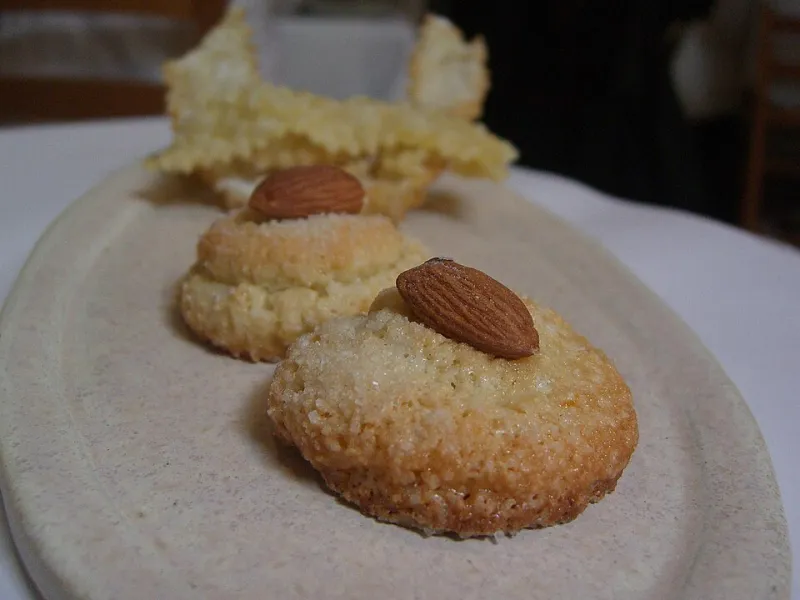
Photo: Alpha, CC BY-SA 2.0, via Wikimedia Commons
There's a house on a quiet cul-de-sac in Roseville, Minnesota, where something remarkable happens every weekday at exactly 4:00 in the afternoon. Nothing loud. Nothing elaborate. A porch light clicks on, a plate appears on a small table by the steps, and one cookie — just one, sometimes two if it's been a day — sits waiting for whoever wanders up the sidewalk.
The neighbors call it the 4 O'Cookie. The kids call it the best part of the whole day. And honestly? After spending an afternoon with the family who started it, we're calling it the most underrated parenting idea in America.
The Whole Thing Takes Four Minutes
Let's be clear about what this is not. It's not a bake sale. It's not a party. It's not another obligation on the family calendar competing with soccer practice and piano lessons. The 4 O'Cookie is aggressively, gloriously small.
The rules, as explained to us over the sound of a school bus hissing to a stop two doors down, are simple:
- One cookie per kid, per day. No exceptions, no negotiations, no second helpings.
- It happens at 4:00. Not 3:45, not 4:30. The specificity is the magic.
- You sit. On the porch, on the steps, on the curb. You don't eat it walking to the next activity.
- Grown-ups get one too. Non-negotiable, according to the kids, who enforce this rule with surprising zeal.
That's it. Four minutes, maybe five. And yet the parents who started it say it has done more for their family's rhythm than anything they've ever scheduled.
Why Ritual Beats Routine
There's a quiet shift happening in how American families think about their days. Call it the "ritual over routine" movement — the idea that kids don't just need structure, they need meaningful structure. A routine is something that happens to you. A ritual is something you belong to.
Pediatric psychologists have been saying versions of this for years: predictable moments of connection help kids regulate their emotions, transition between activities, and feel anchored in a world that moves fast. The problem is that most of us hear "predictable moments" and immediately overcomplicate it into elaborate bedtime chore charts and laminated morning routines.
The 4 O'Cookie refuses to be overcomplicated. It's a bell. It's a landmark in the day. A kid standing at the bus stop at 3:55 knows exactly what's coming, and that knowing — that small, sweet certainty — does the heavy lifting.
"It's the only thing on our schedule that never moves," one of the founding parents told us, shrugging like it was nothing. "Everything else in our week is chaos. But at 4:00, we're on the porch. The kids plan their whole afternoon around it."
The Part Nobody Expected: The Neighbors Showed Up
Here's where the story gets good. Because a ritual this visible — a porch, a plate, a daily gathering — doesn't stay private for long. First it was the kid next door, hovering at the property line at 3:58. Then his little sister. Then the family across the street started sending their kids over with a plate of their own cookies to trade.
Within a month, the 4 O'Cookie had become a rotating thing. A sign-up sheet appeared on a clipboard hanging by the door — the kind of low-tech, gloriously analog solution that solves everything. Each family takes a day (or a week). You don't have to bake from scratch; store-bought counts. The only real requirement is showing up at the same time with the same small offering.
What started as one family's after-school landing pad became the neighborhood's daily check-in. Parents who used to wave from driveways now sit on the steps together for ten minutes. Kids who used to scatter into separate houses now linger. Somebody's grandmother started showing up on Fridays with snickerdoodles and opinions about the local school board, and honestly, that alone might be worth the price of admission.
Want to Start Your Own? Here's the Blueprint
Steal this. That's what it's for.
Pick your time and protect it. After school works for most families, but the hour matters less than the consistency. If 4:00 doesn't fit, do the 5 O'Cookie. The cookie doesn't care about the clock; it cares about the clock staying put.
Keep the portion laughably small. One cookie. The smallness is the point — it keeps the ritual sustainable, keeps sugar drama at bay, and keeps the moment from turning into a snack free-for-all.
Make the location matter. Porch, front steps, a blanket by the front window. Somewhere slightly formal-feeling, somewhere you'd otherwise never sit. The change of scenery signals: this is an occasion.
Start the clipboard. A simple sign-up sheet for neighbors — one day per family per month is plenty — turns a household habit into a street-wide institution. Include a column for "cookie of the week" because people love a little friendly competition.
Let the kids run it. Older kids can be the official timekeeper. Younger kids can pick the cookie. Ownership turns compliance into pride.
The Case for Doing Almost Nothing, Together
We spend a lot of energy as parents engineering big moments — the birthday parties, the theme park trips, the elaborate crafts that take ninety minutes to set up and four minutes to abandon. And those things are great! But the 4 O'Cookie makes a different argument entirely: that the moments kids remember most aren't the ones we produce, but the ones we repeat.
One cookie. One clock. One small pocket of the day that belongs to nobody's schedule but your own.
It's not much. That's exactly why it works.