Little Nests, Big Calm: The Case for Giving Your Kid a Chill Zone of Their Very Own
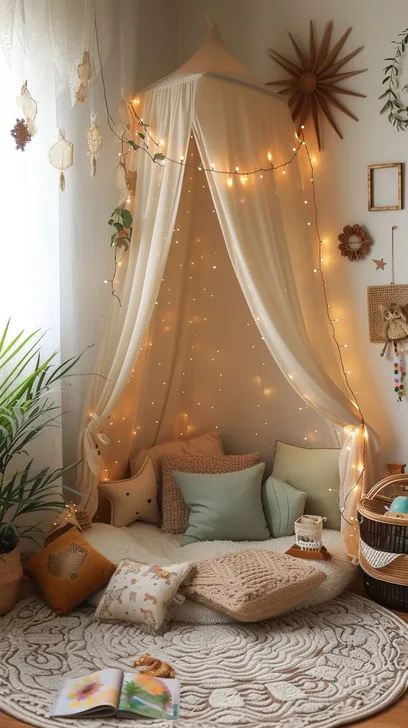
Photo: cozy kids reading nook canopy pillows fairy lights, via images.stockcake.com
Walk into enough American family homes these days and you'll start noticing a pattern: a corner of the living room that belongs entirely to a six-year-old. A teepee draped in gauzy curtains. A twin mattress on the floor piled with squishy pillows. A string of fairy lights and a basket of board books that, somehow, actually gets used.
Welcome to the chill zone — the coziest trend in family living, and honestly, one of the smartest.
Why Kids Are Craving Calm Spaces
Between packed activity schedules, school-day stimulation, and the background hum of everyone's devices, a lot of kids are running on overstimulation all day long. Dr. Elena Marsh, a child psychologist in Portland, Oregon, sees the fallout in her practice regularly. "Kids don't always know how to say 'I need a break,'" she explains. "But when you give them a physical space that signals 'this is where we slow down,' their bodies figure it out fast. It becomes a cue. Soft light, soft textures, quiet — the nervous system gets the message."
The research backs her up. Calm-down corners have long been a staple in early childhood classrooms, and more pediatric occupational therapists are recommending families build versions at home. The magic isn't fancy equipment — it's consistency and a sense of ownership. When a space belongs to the child, it becomes a tool they reach for on their own, not a timeout chair in disguise.
That last point matters. "A chill zone is not a punishment zone," Marsh stresses. "If you send kids there when they're in trouble, you've ruined it. It's an invitation, not a sentence."
Designers Weigh In: Cozy Is a Skill
Interior designers who specialize in family homes say the trend has exploded over the past couple of years. "Parents used to ask for playrooms that could handle chaos," says Maya Tran, a designer based in Austin, Texas. "Now half my consultations start with 'where can we put a quiet spot?' It's a real shift."
Tran's advice for first-timers: think small and sensory. "You don't need a whole room. A corner works. What you're designing is a feeling — lowered light, layered softness, maybe one or two beloved objects. Think of it like a porch swing for a preschooler."
Her starter checklist:
- A boundary. A canopy, a tension rod with a curtain, even a strategically placed bookshelf. Kids love a threshold — it makes the space feel like theirs.
- Floor-level softness. A thick rug, a floor cushion, or a fold-out mattress. Being low to the ground is genuinely grounding for little bodies.
- Warm, dim lighting. Battery-powered puck lights, a salt lamp, or fairy lights on a timer. Overhead lighting is the enemy of cozy.
- One quiet activity. Books, coloring supplies, a fidget basket, a calm-down jar. Not twelve. One.
The Under-$100 Build
Here's the best part: this is one of the cheapest home projects you'll ever take on. A realistic budget:
- Canopy or tension-rod curtains: $15–$25 (Ikea and Target both carry kid-friendly options)
- Floor cushion or body pillow: $15–$20
- Small shag rug: $20–$30 (check HomeGoods and Facebook Marketplace first)
- String lights: $8–$12
- Basket for books and fidgets: $10, or free if you repurpose one
Total: right around $80, with room to spare for a stuffed animal or two that get official residency.
Older kids? Let them co-design it. A nine-year-old with opinions about pillow colors is a nine-year-old who will actually use the space.
Making It Stick
The families who get the most out of a chill zone treat it like any other household habit. Introduce it on a good day, not a meltdown day. Model it yourself — yes, adults are allowed a cozy corner too. And resist the urge to police it. If your kid wants to sit in there eating a snack and staring at the ceiling, congratulations: that's the whole point.
In a culture that treats stillness as something to schedule, a blanket fort with fairy lights might be the most radical furniture you'll ever buy.