Press Record, Turn the Page: The Tiny Family Podcast Taking Over Bedtime
Photo: family recording bedtime story on smartphone cozy living room picture book, via i.pinimg.com
On a rainy Tuesday night in November 2026, the most popular radio station in one Ohio living room is staffed by a seven-year-old, a phone propped against a salt shaker, and a parent trying not to laugh. The show is called The Pajama Penguin Hour. It has one listener in Arizona, one in Florida, and a surprisingly loyal audience of grandparents who say they tune in while folding laundry.
This is the quiet new family ritual we keep hearing about: the bedtime story radio hour. It is not a podcast empire. It is not a side hustle. It is a phone, a beloved picture book, and ten minutes of somebody doing a silly voice for a moose. And somehow, it has become one of the coziest things a family can make together.
The Salt-Shaker Studio
The barrier to entry is gloriously low. You need a smartphone, a picture book your kid already knows by heart, and a room that is quiet enough. That is it. No microphone. No editing software. No theme music unless somebody wants to hum one.
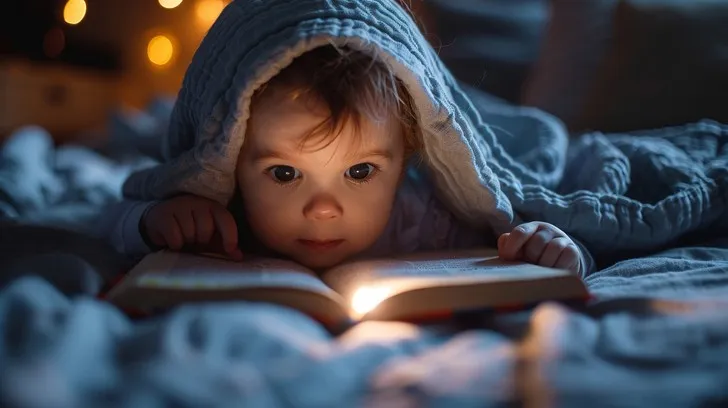
Start with a book that has a clear beginning, middle, and end, and keep the first episode short. Five to eight minutes is plenty. Put the phone in airplane mode so a text message does not interrupt the moose. Open the voice memo app, press record, and let your kid do the intro if they want: 'Welcome to our story hour. Today we are reading...' Then read slowly. Slower than feels natural. Picture books have rhythm, and the recording will pick up the page turns, the giggles, and the dog barking at the mail carrier. That is not a mistake. That is the texture.
Let the Spoon Be the Rain
Sound effects are where the low-pressure fun lives. You do not need a Foley stage. You need a kitchen drawer. A spoon tapped on a pot can be rain. Crumpled paper can be a crackling fire. A straw blown into a glass of water can be a swamp. A wooden spoon on a cardboard box can be a horse, if the horse is tired and perhaps a little sarcastic.
Give every kid a job. One person is the narrator. One person is the sound department. One person is in charge of turning pages loudly enough to be dramatic. If a toddler wants to be the official page-turner, great. If the sound effects get out of hand, even better. The goal is not a polished production. The goal is a recording that sounds like your family on a Tuesday.
A Private Feed, Not a Public Show
Here is the important part: keep it private. This is a family keepsake, not a public podcast. You can share episodes through a private podcast feed, a shared family folder, or even a group chat with grandparents. Some families use a private podcast app so the episodes show up like real shows on Grandma's phone. Others just send a voice memo every Sunday night. Both work.
Ask before sharing a child's voice outside the family. Keep episodes unlisted. Skip the ads, the analytics, and the pressure to grow an audience. The magic is in the smallness of it. A grandparent in another state can hear a grandkid read Goodnight Moon on a random Wednesday, and suddenly the distance feels a little smaller.
The Low-Pressure Rules of Story Radio
A few house rules keep this ritual from turning into homework:
- One take is enough. If somebody burps, keep it. Future generations will want to know.
- Ten minutes max. Bedtime radio should not compete with bedtime.
- Rotate the host. Let a kid pick the book, do the intro, or run the sound effects.
- No monetizing. No sponsor reads. No 'we need to post this.'
- Skip nights freely. A missed episode is not a canceled show.
- Let the adults be bad at voices. The kids will not grade you.
Why Hearing a Parent's Voice Lands Differently
There is something quietly powerful about a parent's voice on demand. Kids ask for the same recording at bedtime, on a sick day, on a sleepover, or in the car on the way to school. The voice is familiar. The story is familiar. The whole thing says: you are safe, and somebody who loves you is nearby, even when they are not in the room.
Parents often hate the sound of their own recorded voice. That is normal. Your kids do not hear the awkward pauses or the weird vowel you suddenly notice. They hear the person who reads to them. Grandparents hear the same thing, plus a little bit of time they get to keep.
Tonight's Episode
If you want to start tonight, keep it simple. Pick a book. Sit somewhere cozy. Press record. Say: 'Welcome to our story hour. Today's book is... Sound effects by... And now, page one.' Read. Let the spoon be the rain. End with: 'Goodnight. See you tomorrow.'
That is the whole show. It will take ten minutes. It might become the thing your family listens to for years.